Polymarket is the largest prediction market in the world. You trade Yes or No shares on real-world events, priced between 1 and 99 cents. A Yes share pays $1 if the event happens and $0 if it doesn't, so the price at any moment is the market's live probability. In March 2026 the platform cleared $10.6 billion in notional volume.
That's the mechanism. The details, the fees, and the two-venue structure are where it gets interesting. For a live example of contract wording deciding everything, see government shutdown odds.
Shares, prices, and payouts
Every market is a question with a Yes side and a No side. Buy Yes at 62 cents and you're saying the real probability is higher than 62 percent. If the event resolves Yes you collect $1 per share; if not, you lose the 62 cents. You can sell any time before resolution, which is what separates trading from betting: a position that moves your way can be closed for profit without waiting for the outcome.
Polymarket shows a real order book, so you can see depth and place limit orders instead of taking whatever the screen shows. Reading prices as probabilities is the foundational skill; if that's new, start with what a prediction market is.
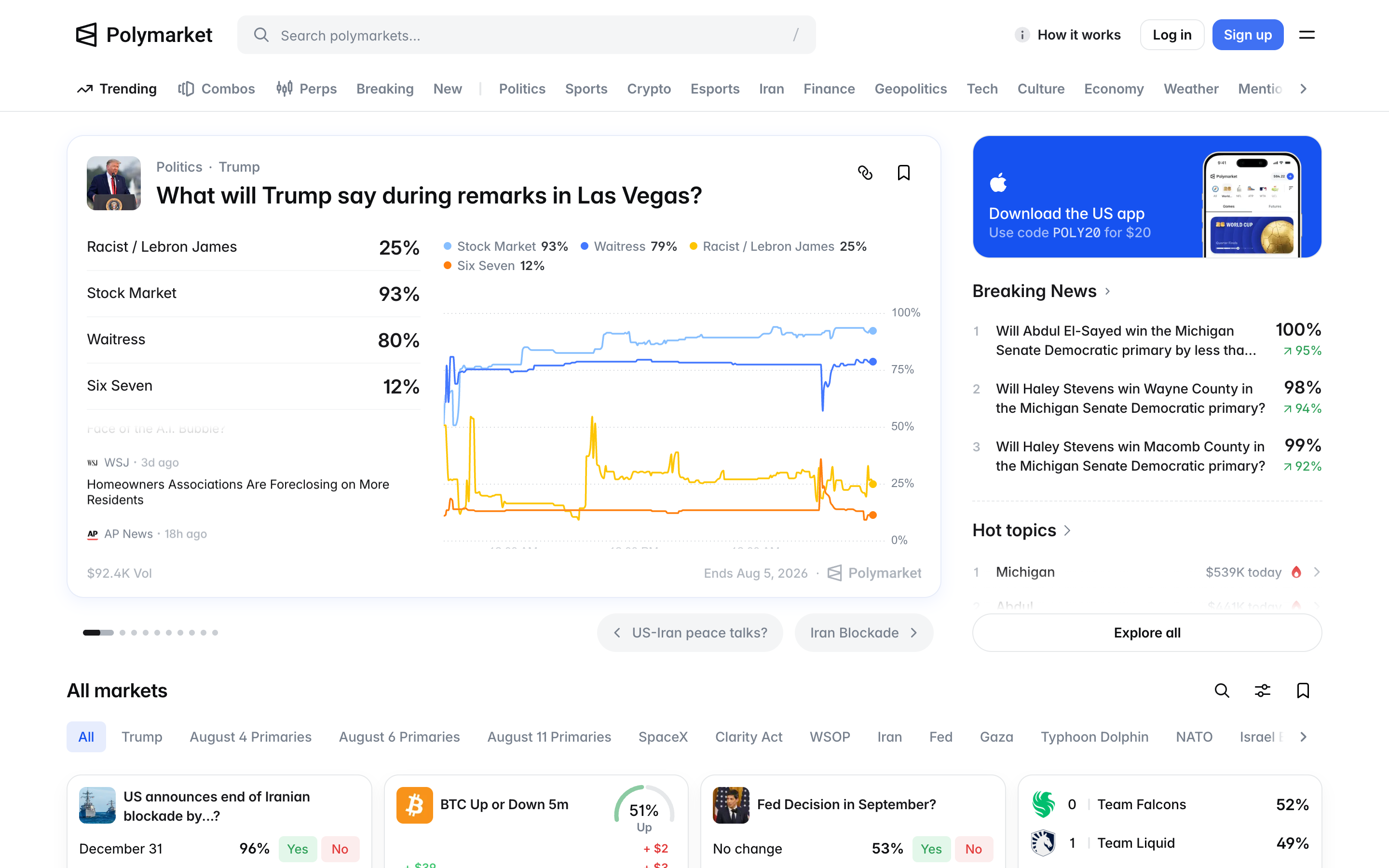
Two Polymarkets, one brand
The global platform settles in USDC on Polygon, with outcomes resolved by UMA's optimistic oracle. The US is different. After a $1.4 million CFTC fine in January 2022 locked American users out for almost four years, Polymarket paid $112 million for QCEX, a CFTC-licensed exchange and clearinghouse, and relaunched a regulated US exchange in December 2025. US trades clear through that regulated clearinghouse, not the crypto rails.
So yes, Polymarket is legal in the US now, through the regulated exchange. The full story, including what the ICE money means, is in the Polymarket review.
The fees changed in March 2026
Zero-fee Polymarket is over. On March 30, 2026 the platform introduced taker fees on nearly every category, using the same shape Kalshi uses: a fee rate times price times one minus price, per share. The fee is biggest for 50-cent contracts and shrinks toward the extremes. What that costs a realistic trading pattern, with worked examples, is in the Polymarket fees breakdown.
How markets resolve, and what can go wrong
Global markets resolve through UMA's optimistic oracle: a proposed outcome stands unless disputed. It's fast and decentralized, and it has also produced disputed resolutions on ambiguously worded markets. The rule that saves you money: read the market's resolution criteria before you size a position, not after. The clarity act polymarket contract shows how a named bill, a fixed deadline, and published criteria control settlement.
Polymarket by the numbers
$10.6B
notional volume in March 2026, six times its level from six months earlier
$2B
committed by ICE, the owner of the New York Stock Exchange
Dec 2025
regulated US exchange launch, built on the $112M QCEX acquisition
Polymarket next to Kalshi
Polymarket has the widest market menu on earth; Kalshi has roughly three quarters of category volume and the deepest regulated books. They price the same events differently more often than you'd think, and the head-to-head is in Kalshi vs Polymarket. The honest answer is the same one that ends most venue debates: the best market is whichever book has the best price on your event. That's what Kairos is for. One terminal, both venues, one account.
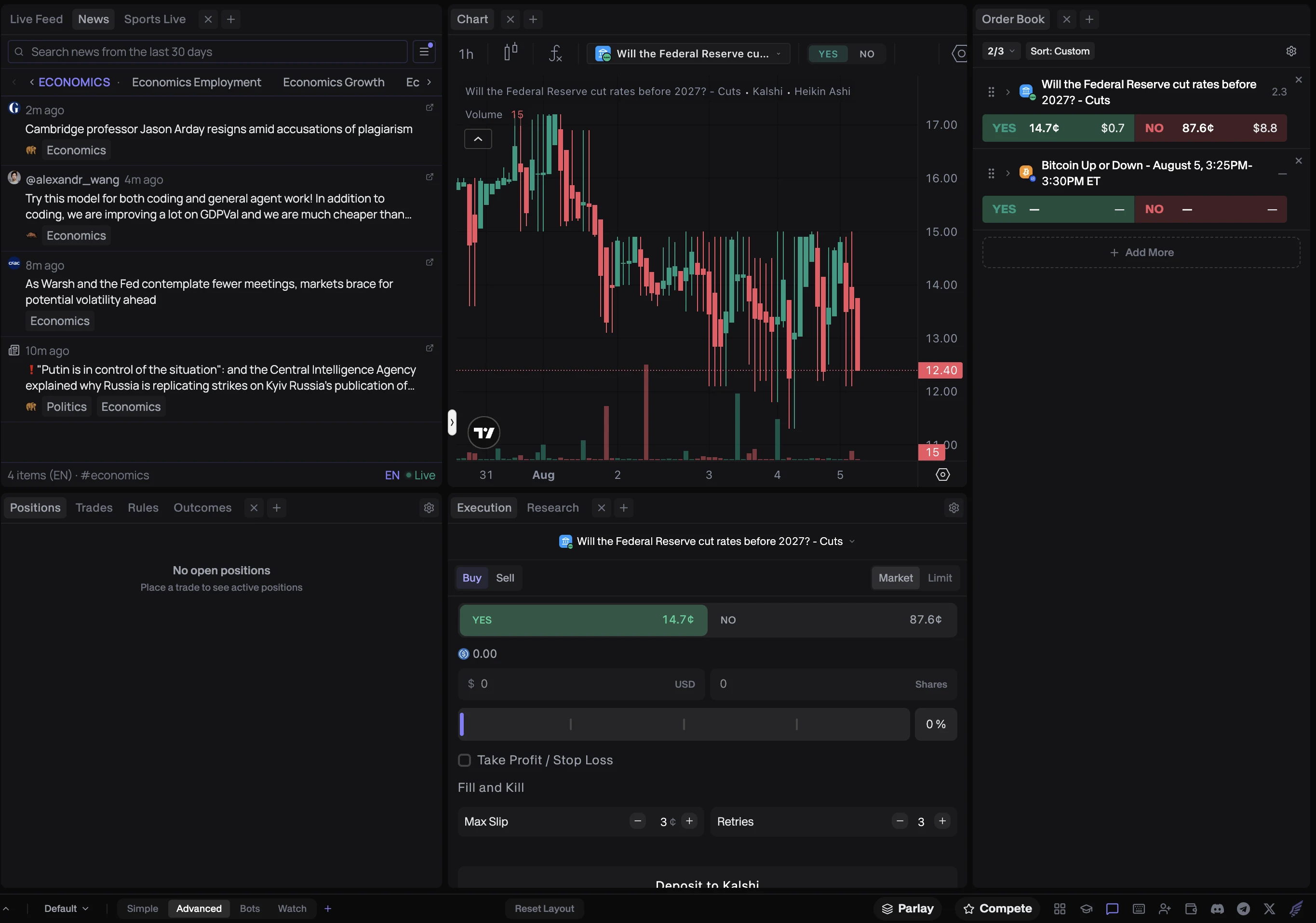
Polymarket company equity is a separate asset from the Yes and No shares on this page. Our Polymarket stock guide explains the private shares, public ticker status, valuation evidence, and the difference between an outcome contract and corporate ownership.
Traders comparing season-long sports contracts can see live Polymarket and Kalshi prices in the Premier League odds table. The page matches team contracts, market-implied probabilities, and settlement rules across both venues.