Kalshi is a federally regulated US exchange where you trade Yes or No contracts on real-world events. Elections, Fed decisions, game outcomes, weather. A Yes contract settles at $1 if the event happens and $0 if it doesn't, so the price at any moment is the market's live probability. In July 2026 it cleared $37.7 billion in trading volume, roughly 74 percent of the entire prediction-market category.
That's the definition. The interesting part is what makes it different from everything it gets compared to.
An exchange, not a sportsbook
Kalshi was founded in 2018 by Tarek Mansour and Luana Lopes Lara and launched in 2021 as the first CFTC-regulated exchange built for event contracts. Regulated exchange is the load-bearing phrase. A sportsbook sets a line and takes the other side of your bet; it profits when you lose. On Kalshi you trade against other traders. The exchange matches orders and charges a fee, the same structure as a stock or futures exchange.
That structure changes how you use it. Prices move with the order book, you can see depth, and you can exit a position any time before the event resolves instead of riding a bet to the end. Traders who think in probabilities treat mispriced contracts the way equity traders treat mispriced stocks.
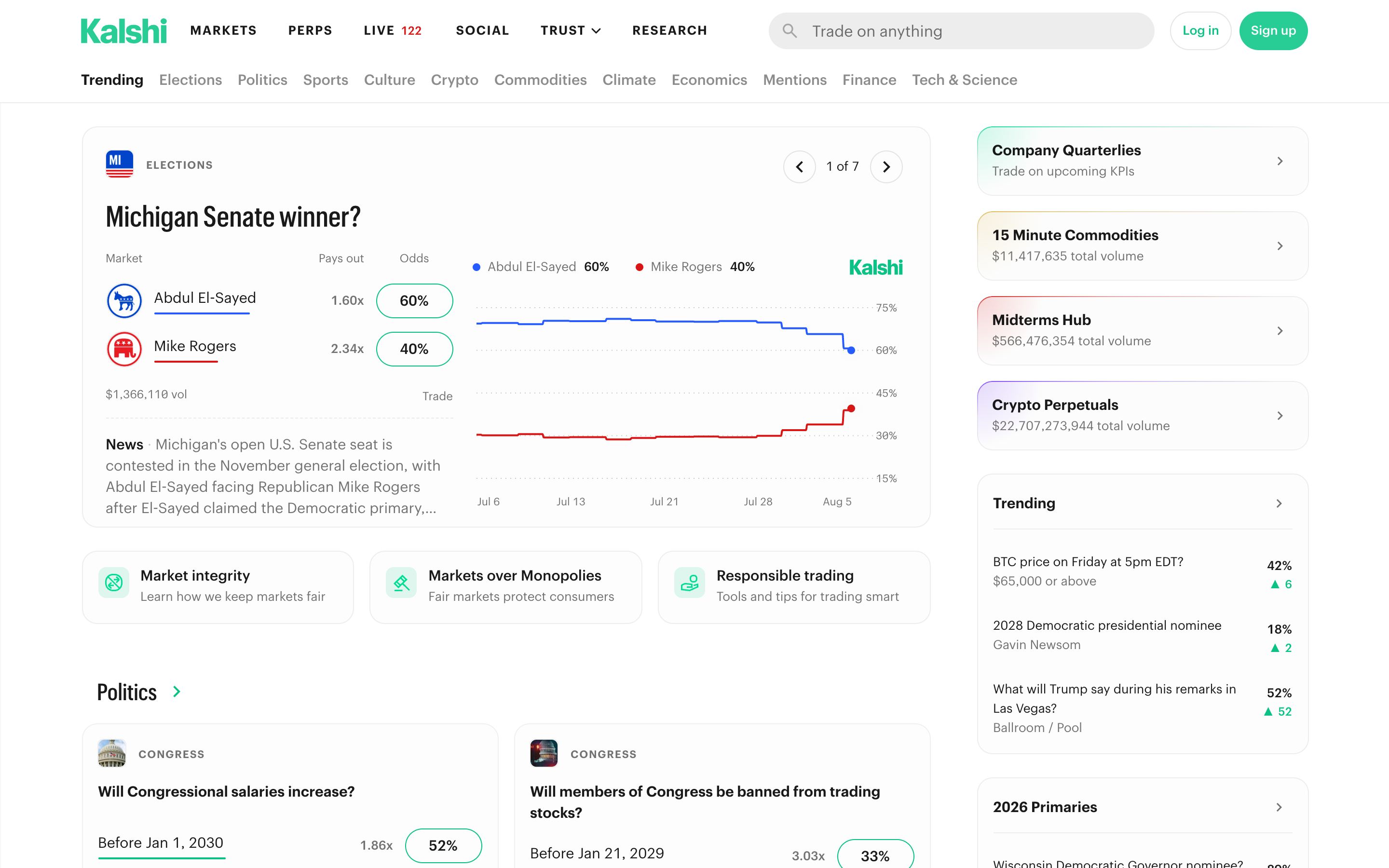
How a contract works, in one paragraph
Every market is a question with a Yes side and a No side, priced between 1 and 99 cents. Buy Yes at 30 cents and you're saying the real probability is higher than 30 percent. If the event happens you collect $1 per contract; if it doesn't you lose the 30 cents. Sell whenever you want before resolution. The full mechanics with worked examples are in how Kalshi works.
What you can trade
- Politics and elections, the category that made prediction markets famous
- Economics, from Fed rate decisions to CPI prints
- Sports, now the biggest category by volume. In July 2026, event contracts carried roughly 27 percent of all legal US sports-wagering volume
- Weather and climate outcomes
- Culture, awards, and headline events
Is Kalshi legal?
Yes. Kalshi operates under CFTC regulation and is available in all 50 states, which no state-licensed sportsbook can say. The regulatory story, the state-level fights, and what they mean for your money are covered in is Kalshi legit, and the cost of trading is in the Kalshi fees breakdown.
Kalshi by the numbers, August 2026
$37.7B
Kalshi notional volume in July 2026, the biggest month any prediction market has printed
~74%
of all prediction-market volume in July. The whole category did a record $50.59B combined
50 states
full US availability under federal CFTC regulation, which no state-licensed sportsbook matches

Where Kalshi sits in the market
Polymarket runs second with the widest market menu on earth. Two newly licensed sports exchanges, ProphetX and Novig, undercut both on posted fees with far thinner books. And the sportsbook money has arrived: FanDuel, DraftKings, and Robinhood-backed Rothera all launched exchange products in the last year. The head-to-head is in Kalshi vs Polymarket, and the full field is in Kalshi alternatives. How Polymarket itself works, mechanics and fees, is in how does Polymarket work.
The honest answer underneath all of it: the best venue is whichever book has the best price on your event, and that changes by the hour. That's the problem Kairos exists for. One terminal, every venue, one account.
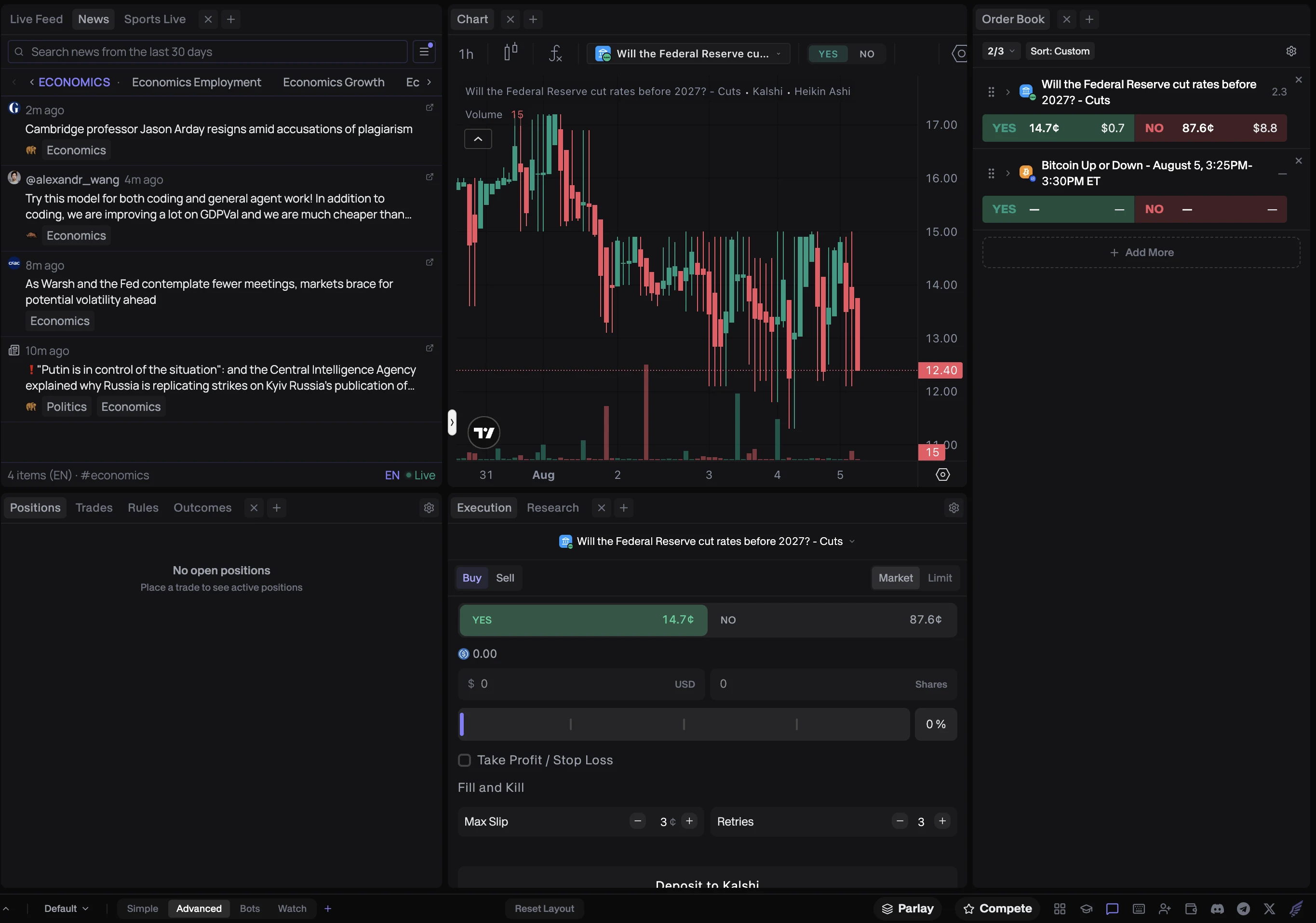
The live shutdown fight is the current worked example: government shutdown odds.
Kalshi operates a regulated exchange and remains a private company. The Kalshi stock guide separates company equity, private-market price indications, and the event contracts traders can access now.