


The ranking, and the numbers behind it
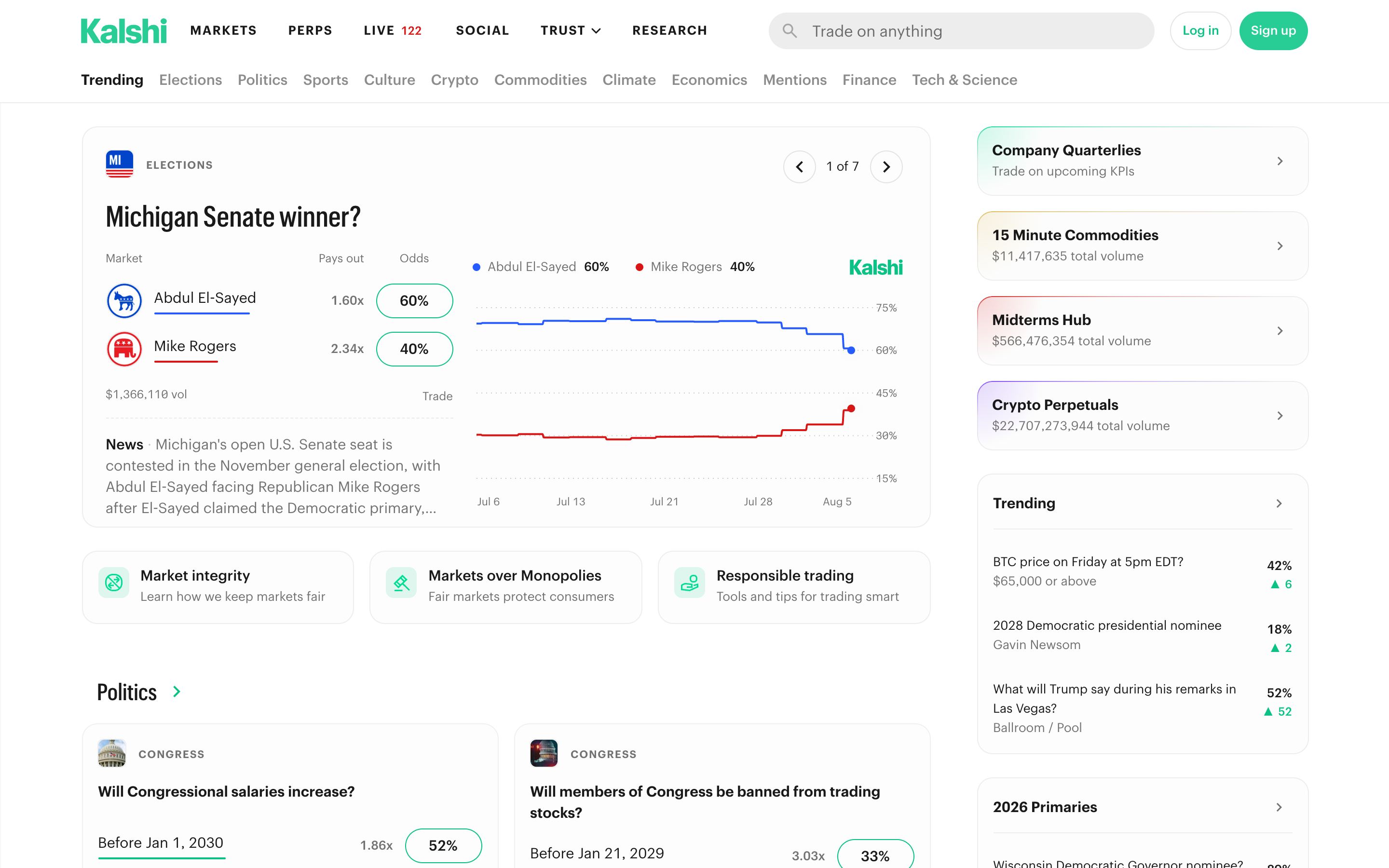
July 2026 was the biggest month prediction markets have ever printed: $50.59 billion in combined notional across the major venues, up 7.8 percent over June, with the World Cup pushing event contracts to roughly 27 percent of all legal US sports-wagering volume. Inside that record, the hierarchy is lopsided. Kalshi cleared $37.7 billion, about 74 percent of the category, and is reportedly raising at a $40 billion valuation on the back of it. It is the only venue with real depth across politics, economics, sports, crypto, and weather, in all 50 states. That is the number one, and it is nobody else's contest this year. The full trader's read is in the Kalshi review.
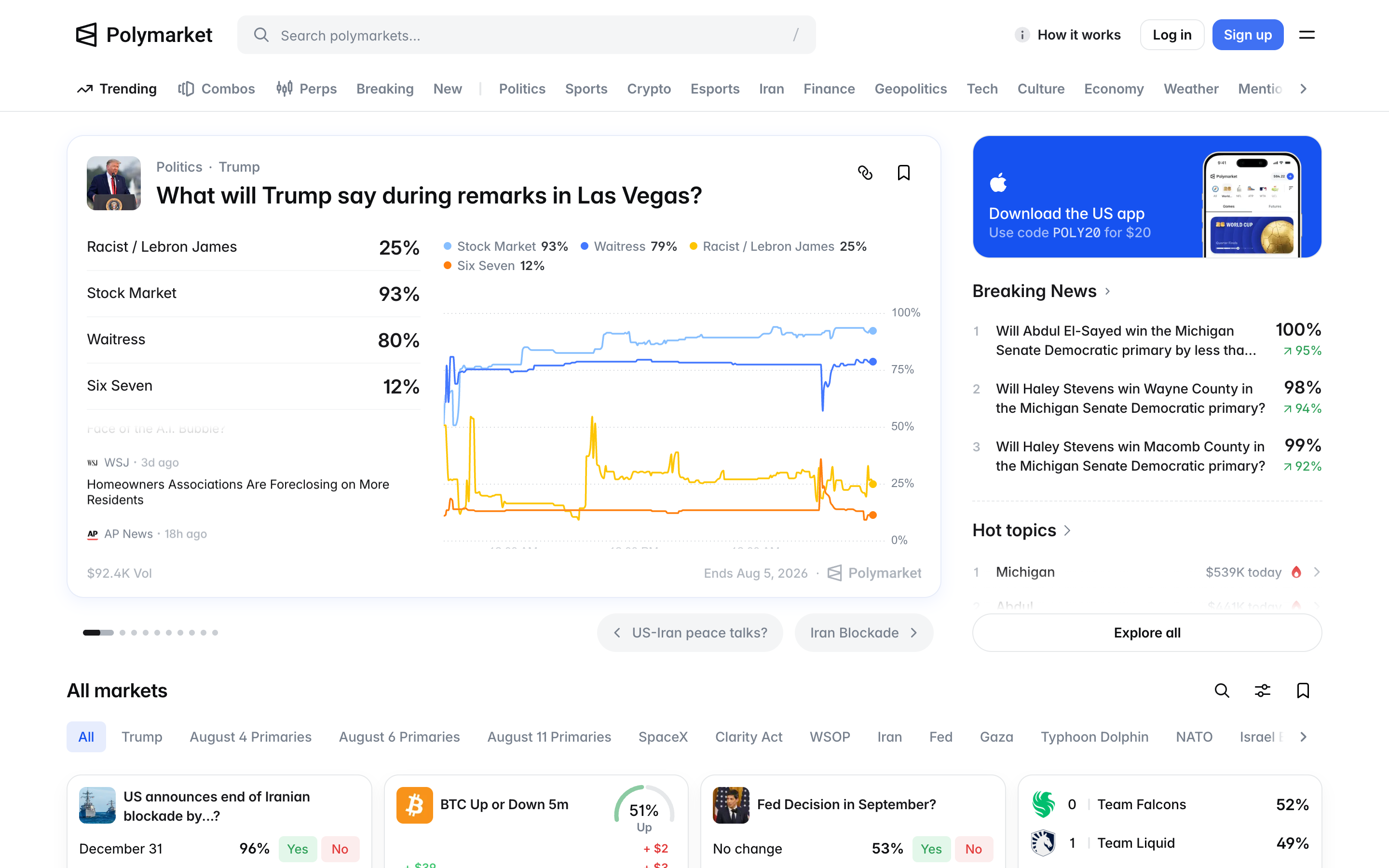
Polymarket holds second on breadth rather than share: $12.9 billion in July across the global exchange and the newer US one, the widest market menu anywhere, and ICE's $2 billion behind it. The structural change a ranking has to mention is fees. Polymarket charged takers nothing for years and now charges on nearly every category, which moved the math on every strategy that used to run free. The schedule is worked through in Polymarket fees.
The low-fee specialists, and what the fee buys you
Two newly licensed sports exchanges undercut both leaders on posted cost. ProphetX charges 2 percent of net winnings on straight trades and zero on parlays. Novig charges takers a fraction of a cent per contract and pays makers to add liquidity. Both are CFTC-designated, both are sports-only, and both carry the same caveat: the fee schedule is only worth what the book behind it can fill. Recent reviews on both describe orders sitting unmatched outside the major leagues.
That is the tradeoff this whole ranking turns on. A cheap fee on an unfilled order is worth nothing, and a deep book quietly pays for itself in tighter spreads and instant fills. The affiliate listicles that dominate this search rank venues by signup bonus. A trader ranks them by what a $500 order does to the price.
The sportsbook and brokerage money has arrived
The 2026 entrants are distribution plays. FanDuel Predicts launched in December 2025 on CME's exchange rails and reached all 50 states by mid-January. DraftKings switched from renting CME to running its own exchange, DKeX, in late June, and self-certified parlay contracts in August. Robinhood and Susquehanna launched Rothera in June, and its founders claim 7 to 8 percent of CFTC-venue volume already, a company figure no third party has verified. Their brands will move volume. Their books are young, and none publishes depth.
The rest of the field is niche by design. ForecastEx, Interactive Brokers' venue, takes no sell orders and pays roughly 3.8 percent on collateral, which makes it a parking venue for slow forecasts rather than a trading floor. PredictIt still runs politics under its $3,500 cap, covered in PredictIt alternatives. Manifold went to play money in 2025. And Hyperliquid's outcome contracts, live since May, have cleared under $400 million cumulative, a rounding error against a $50 billion month, worth watching and not yet worth ranking.
The best market is the best price, and it moves
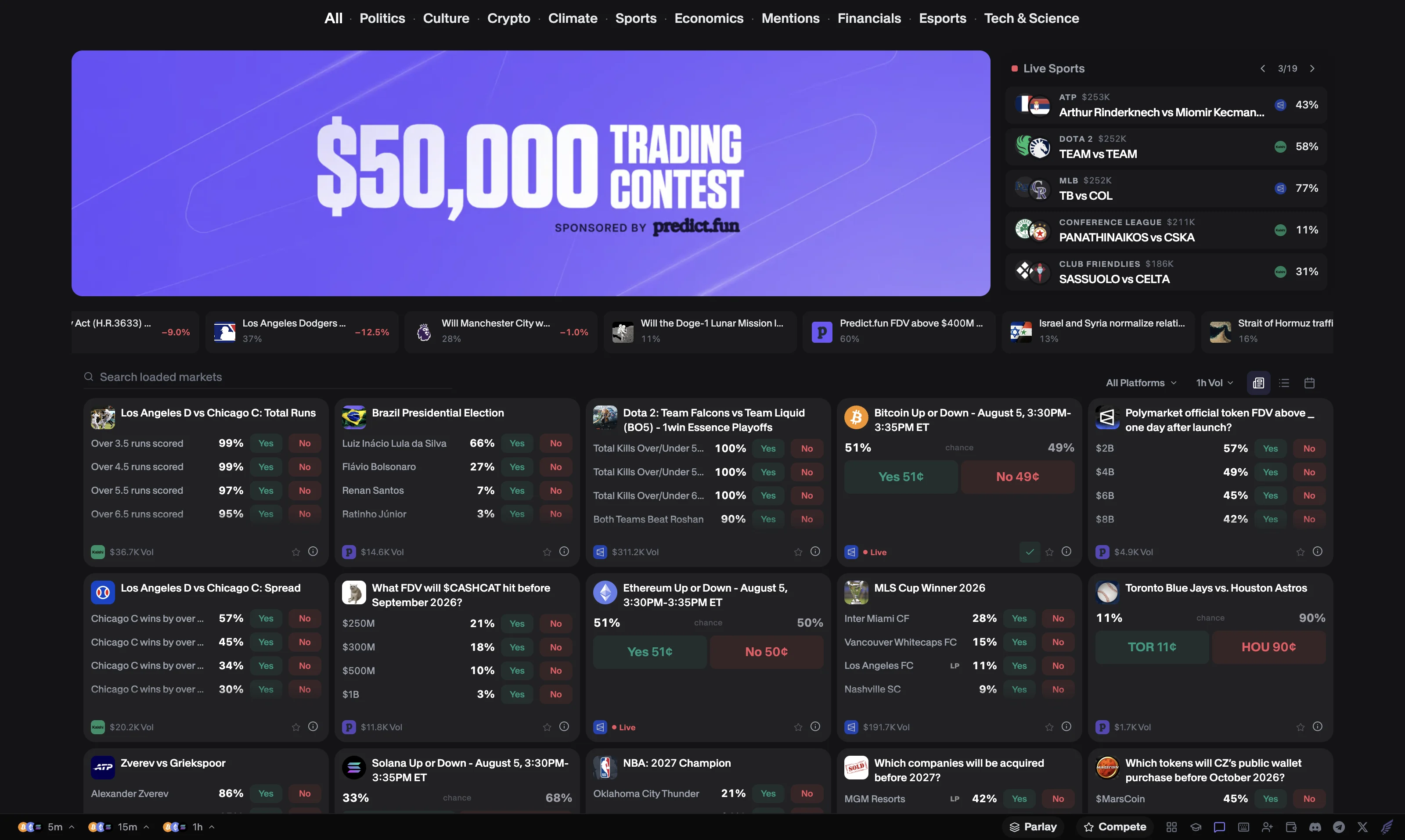
Here is what every listicle on this SERP leaves out: the same event trades on multiple venues at different prices. A World Cup winner, a Fed decision, an election, each one prints on Kalshi and Polymarket simultaneously, and the books disagree by cents all day. Pick one venue and you accept its price, its spread, and its fee as the whole market. They are not the whole market. The gap between two books on the same contract is free edge for whoever can see both.
So the working answer to "which prediction market is best" is: the one with the best price on the event in front of you, and that answer changes by the hour. Kairos exists for exactly that reason. It aggregates Kalshi, Polymarket, and Predict.fun into one order book with a global best bid and ask, sub-second data, and advanced order types, free. Rankings are for choosing where to open an account. The wider field of venues is worth knowing either way, and event contracts carry real market risk on every one of them.
Compare every major Kalshi alternative before choosing a single venue.
Sources
Every volume, share, fee, and launch claim on this page comes from dated coverage or the venue's own materials, fetched August 21, 2026.
- CryptoTimes, August 3, 2026: the $50.59 billion July record, Kalshi's $37.7 billion, and Polymarket's $12.9 billion combined.
- CryptoBriefing, August 17, 2026: Kalshi's share of US-approved-platform volume and the post-World Cup cooldown below $10 billion a week.
- CoinDesk, August 13, 2026: the reported $750 million raise at a $40 billion valuation.
- OddsShopper, August 19, 2026: prediction markets at roughly 27 percent of US legal sports-wagering volume during the World Cup.
- CME Group, December 22, 2025: the FanDuel Predicts launch.
- The Defiant, June 2026 and InGame, August 2026: the DKeX launch and its August parlay certification.
- Tekedia, August 2026: Rothera's launch and its founders' 7 to 8 percent share claim.
- CoinGecko and KuCoin, May 2026: Hyperliquid's HIP-4 outcome contracts and their volume to date.