


What Novig is in 2026
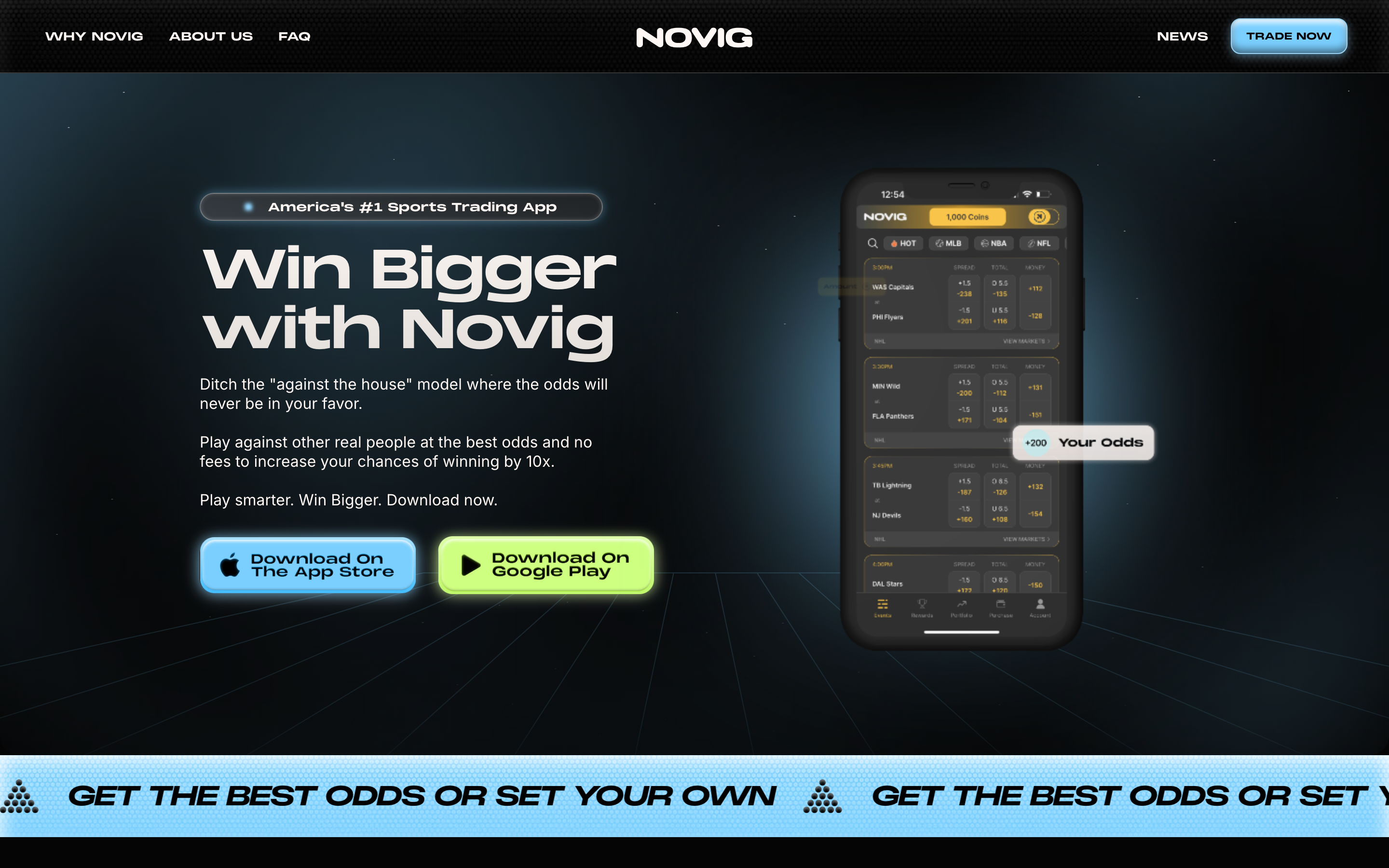
Novig finished the license play. Its exchange entity, Ludlow Exchange, filed for CFTC designation on January 21, 2026 and had it granted on June 16. On August 4 the regulated sports prediction market went live in 47 states, and the sweepstakes app that carried the brand since 2024 was retired. Existing users install a new app and trade real dollars.
The scope is deliberately narrow. NFL, MLB, UFC, PGA Tour, tennis, and basketball, plus player props and season-long futures. No politics, no economics, no crypto. The minimum age is 21, above the CFTC's usual 18.
Three states are geofenced: Arizona, Michigan, and Nevada. New York is a courtroom. On August 5, one day after launch, Novig sued the New York attorney general and the state gaming commission in the Southern District of New York, asking a federal judge to stop the state from enforcing its gambling laws against CFTC-regulated contracts.
For a casual sports fan, Novig is a real upgrade over sweepstakes coins: regulated, real dollars, a clean app. This page is for the trader who needs more than one category and more than one book.
Novig reports more than $6 billion in cumulative trading volume across its products. The category it just joined at full strength is the one Kalshi built. The full Novig fees, ratings, and sentiment record covers the exchange, and the licensing question stands alone in Is Novig legit.
The road from sweepstakes to a federal license
Novig's path is the sweepstakes category's story, compressed. Sportico reported the company pulled out of New Jersey under legal pressure in 2025, fresh off an $18 million raise. Six months later it filed for a federal exchange license, and six months after that it was live in 47 states and suing the one big state that pushed back.
The pattern matters for traders. Sweepstakes coins were a workaround. CFTC contract markets are the real rails, and every serious sports-trading operator is now converging on them.
The mechanics were exchange mechanics all along. Novig's own pitch is get the best odds or set your own, which a futures trader would call taking or making. The translation to contract-market terms was short because the model was always an order book.
That convergence is the strongest argument for the category, and it is also why one more venue is not the whole answer. More venues means more fragmentation, and fragmentation is a tooling problem.

What are the best apps like Novig?
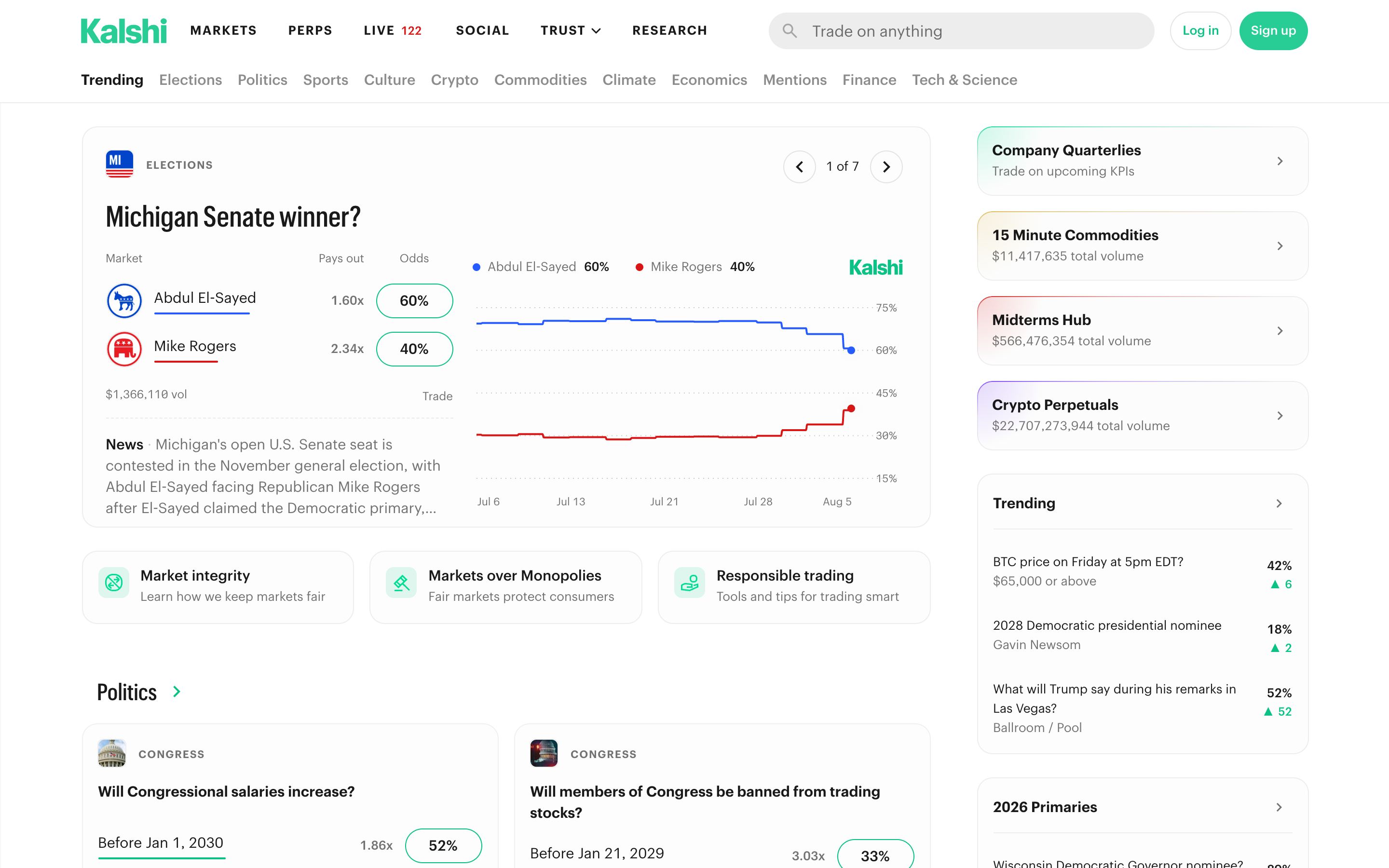
Kalshi is the deep end. A CFTC Designated Contract Market legal in all 50 states, with sports next to politics, economics, and weather, a central limit order book, and a public API. It cleared $33 billion in the first quarter of 2026 alone. The fee mechanics are in our Kalshi fees guide, and the sports-switcher case is in Kalshi vs Robinhood.
Polymarket is the breadth end. It runs one of the deepest prediction-market books in the world, traded $26.17 billion in Q1 2026, and returned to the United States in December 2025 with sports first in the rollout. The full read is in Polymarket alternatives.
ProphetX runs Novig's play from the other direction: CFTC designation five days before Novig's, a June 16 relaunch, 49 states, and a 2 percent fee on net winnings. The breakdown is in ProphetX alternatives.
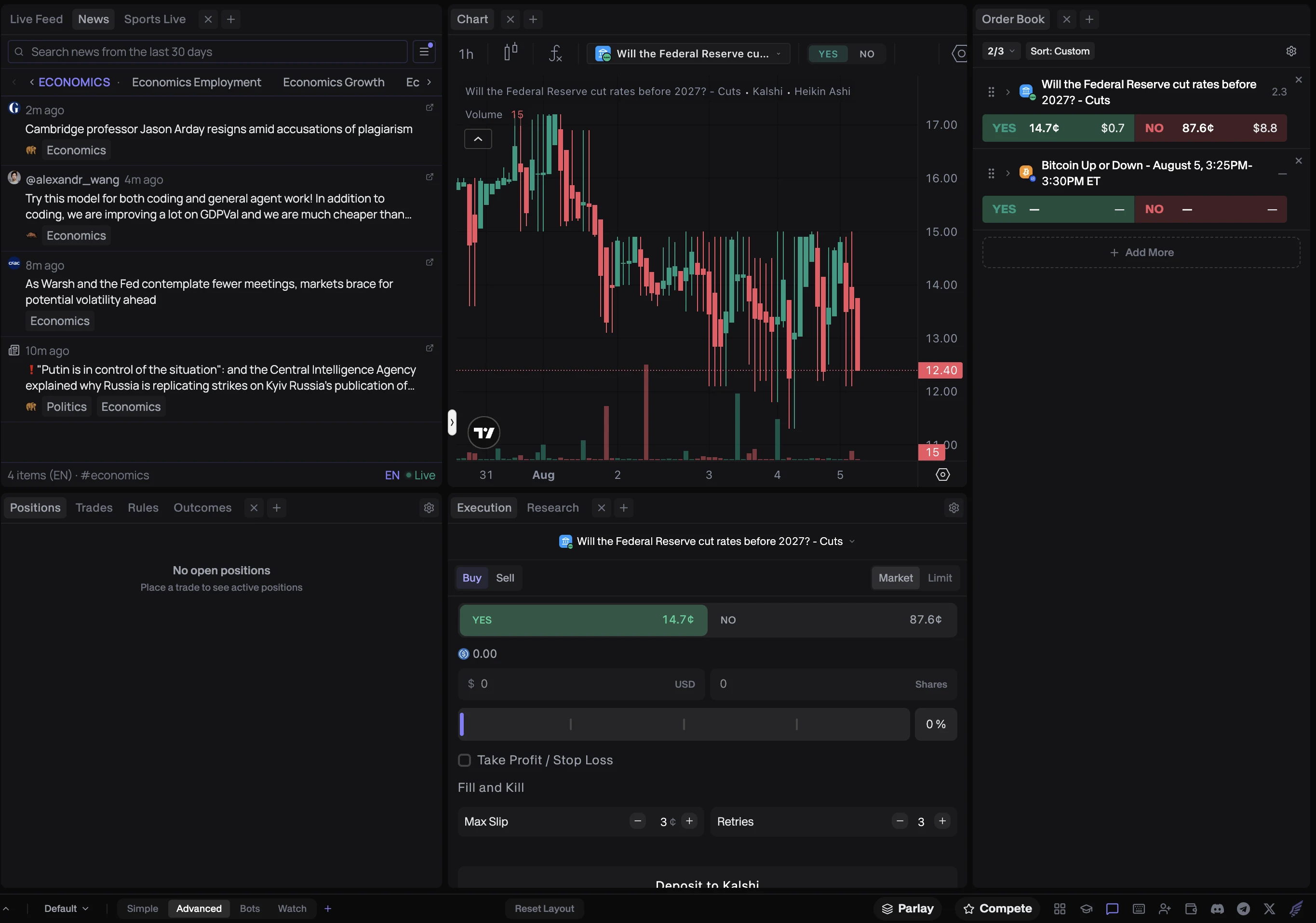
Kairos sits above the venues. One terminal for Kalshi, Polymarket, and Predict.fun: one order book, sub-second data, advanced order types, free to use. What the Bloomberg Terminal did for Wall Street, Kairos does for prediction market traders.
One book is not a market
Novig's entire reported history is more than $6 billion traded. Kalshi cleared $33 billion in the first quarter of 2026, and Polymarket $26.17 billion in the same quarter. Depth is fills, and fills are the product.
Spread is the cost no fee schedule discloses. Thin markets quote wide, and crossing a wide spread costs more than any commission. Depth compresses spreads, and the compressed spread is where a trader's edge survives.
The same game prices differently on different books. A trader running one venue takes whatever that book offers. A trader running three venues takes the best price on every ticket, and the arithmetic behind that habit is in implied probability.
Run the deep books through one terminal, and add the new venues when their liquidity earns it. The wider field is mapped in Kalshi alternatives. See you in the order books.
Sources
Every regulatory and volume claim on this page comes from dated coverage or the venue's own materials.
- CNBC, June 16, 2026: the CFTC approval of Novig's Ludlow Exchange.
- DeFi Rate, June 2026: the January 21, 2026 application date, ProphetX's designation days earlier, and its June 16 relaunch.
- Bettors Insider, August 8, 2026: the August 4 launch, the 47-state footprint, the sports list, the 21+ minimum, the $6 billion cumulative volume figure, and the August 5 lawsuit against New York in the Southern District of New York.
- Deadspin, August 5, 2026: the Arizona, Michigan, and Nevada geofences and the app transition off sweepstakes.
- Sportico, 2025: the New Jersey exit under legal pressure after the $18 million raise.